The Evolution of 360 Marketing: Then vs. Now
Marketing is evolving faster than ever. What once was a brand-centric approach has now become a customer-first ecosystem, driven by data, personalization, and continuous engagement. Understanding the differences between old 360 Marketing and today’s modern framework is essential for brands that want to stay ahead in a crowded digital landscape.
What is 360 Marketing?
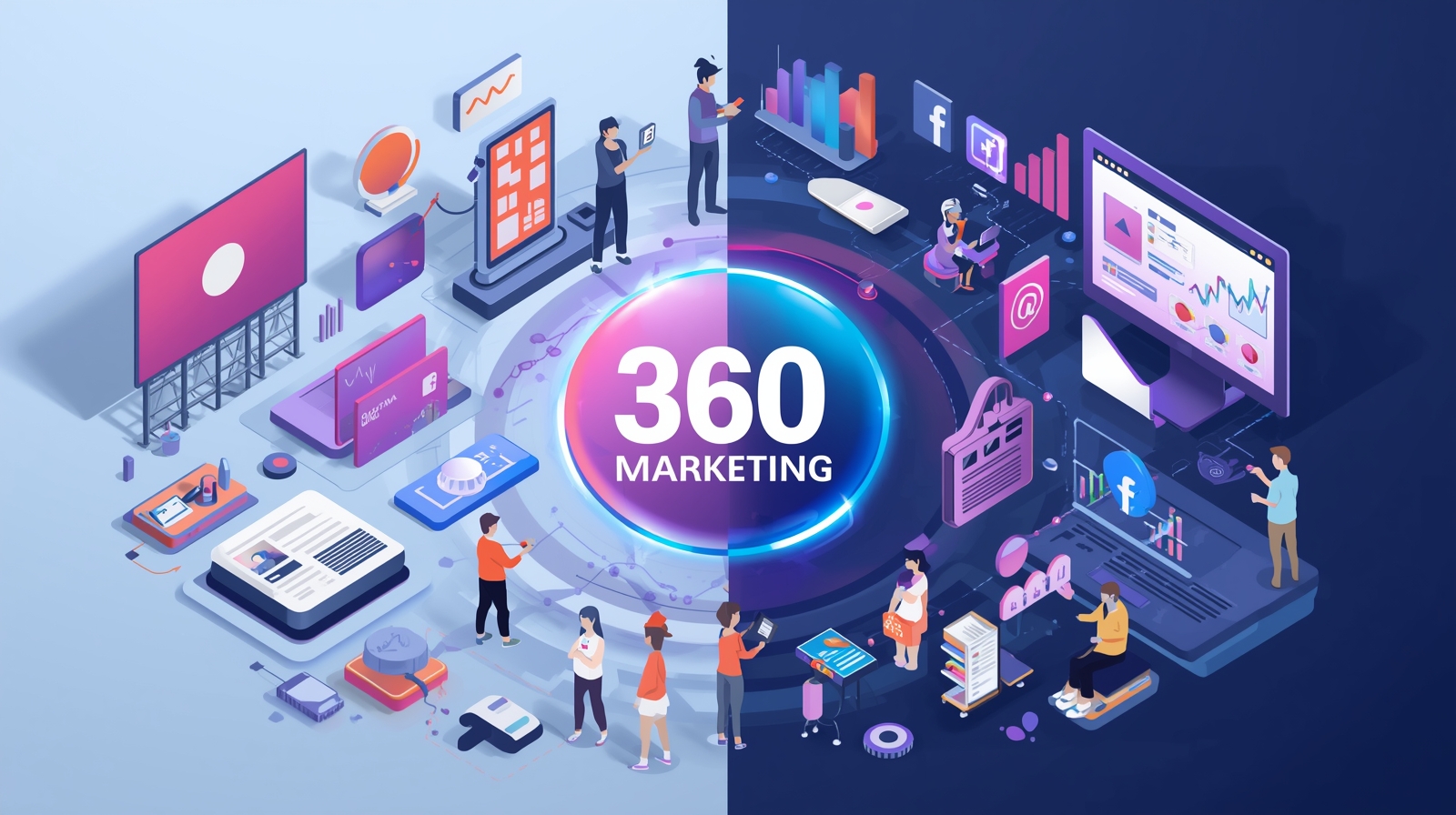
360 Marketing refers to a strategy that covers every possible touchpoint between a brand and its audience. It ensures that customers experience a consistent brand message across online and offline channels.
-
Traditional 360 Marketing: Focused on coverage and reach (TV, print, radio, billboards).
-
Modern 360 Marketing: Focused on connection, engagement, and personalization (social media, e-commerce, influencer marketing, AI-driven ads).
360 Marketing Then: A One-Way Conversation
In the past, 360 Marketing campaigns were designed like megaphones—broadcasting the same message everywhere, with little feedback from the audience.
Key characteristics:
-
Mass communication through TV, radio, newspapers, and outdoor advertising.
-
Campaigns measured mostly by reach and frequency.
-
Customer journey followed a predictable funnel model: Awareness → Consideration → Purchase.
-
Limited personalization or engagement.
While effective at the time, this approach had one major flaw: consumers had no voice. Brands spoke, customers listened.
360 Marketing Now: A Two-Way Relationship
The rise of the internet, smartphones, and social platforms changed everything. Today’s 360 Marketing is about building relationships, not just awareness.
Key characteristics:
-
Integrated campaigns across digital and offline platforms.
-
Real-time data analytics to track consumer behavior.
-
Personalization through AI, automation, and customer segmentation.
-
Focus on engagement, retention, and advocacy, not just sales.
-
Consumer-generated content and online communities playing a key role.
Instead of telling customers what to buy, brands now invite them to co-create, share, and advocate.
Campaign Journey: From Funnel to Loop
The traditional linear funnel has evolved into a non-linear loop. Customers no longer move step by step—they jump around, research, compare, and engage at different stages.
Then – Linear Funnel:
-
Awareness → Consideration → Purchase → Loyalty
Now – Dynamic Loop:
-
Awareness ↔ Engagement ↔ Purchase ↔ Advocacy ↔ Re-engagement
This continuous journey means that even after purchase, brands must keep engaging customers to build long-term loyalty and word-of-mouth advocacy.
Modern Marketing Framework: Agility and Integration
Old marketing frameworks were campaign-based with fixed timelines and rigid strategies. The new era demands agility, integration, and continuous optimization.
-
Old Framework:
-
One-way messaging
-
Fixed campaigns with limited feedback
-
Brand-focused strategies
-
-
New Framework:
-
Two-way conversations with consumers
-
Always-on marketing (social, community, content, performance ads)
-
Customer-first strategies supported by data and insights
-
Integration of storytelling, influencers, community activation, and performance marketing
-
In short: Marketing is no longer about exposure—it’s about experiences.
Why Updating Your 360 Marketing Strategy is Crucial
If your brand still applies the old 360 Marketing model, you risk losing relevance. Today’s consumers expect:
-
Personalized experiences across platforms.
-
Authentic communication from brands.
-
Instant responses and seamless digital journeys.
Brands that fail to adapt are quickly replaced by competitors who understand modern customer expectations.
Key Takeaways for Brands in 2025 and Beyond
-
Shift from coverage to connection – don’t just appear everywhere; be meaningful everywhere.
-
Adopt data-driven decision-making – let analytics and AI guide your strategies.
-
Think beyond campaigns – build an always-on brand presence.
-
Engage communities – leverage influencers, loyal customers, and niche groups.
-
Prioritize experience – marketing today is not just seen, it’s felt.
Final Insight & Call to Action
The evolution of 360 Marketing—from a linear, brand-driven model to a dynamic, customer-centric loop—marks a turning point in how brands must approach growth. Success now depends on your ability to adapt, integrate, and engage continuously.
At FMGroup (FutureMediatrix), we help brands navigate this transformation by creating modern 360 Marketing strategies that combine creativity, data, and technology.
👉 It’s time to update your marketing playbook. Let’s build your future-ready marketing framework today. Contact FMGroup at www.futuremediatrix.com.